Entrepreneurial Mindset: Teaching Kids to Create, Not Just Consume
Sep 2026 · 8 min read
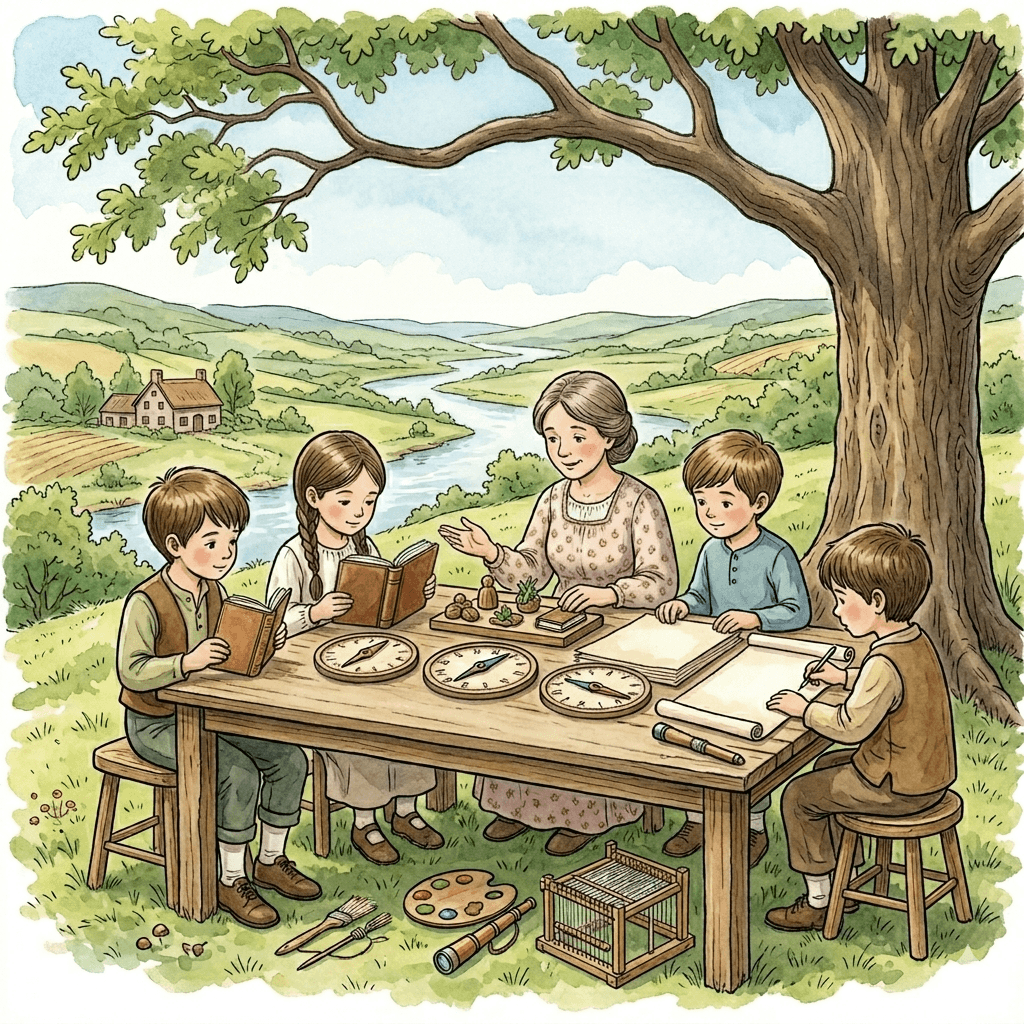
I still remember the moment my oldest came home from traditional school and asked me, "Mom, why do we have to learn this if I can just look it up on Google?" It wasn't disrespect—it was a fair question. And it made me realize something: we weren't teaching our kids to think. We were teaching them to follow. When we switched to homeschooling, I made a quiet decision to flip that around. We'd focus on building an entrepreneurial mindset in our kids, not because I expected them all to start businesses (though one might!), but because that way of thinking—creating solutions, taking smart risks, staying resourceful—makes you capable of anything.
The entrepreneurial mindset isn't just for future CEOs or tech founders. It's for the kid who figures out how to solve a problem nobody asked her to solve. It's for the teenager who realizes he can turn his passion into income. It's for the adult who doesn't wait for permission or perfect conditions to make something happen. And I've learned that building an entrepreneurial mindset in kids is less about teaching "business" and more about shifting how they see the world and their place in it.
Let me share what's actually worked in our homeschool—and what might work for yours too.
Why Your Homeschool is the Perfect Place to Build This
Honestly, traditional school is set up to do the opposite. Kids sit at desks, follow instructions, take tests on material someone else decided mattered, and the "right answer" is predetermined. I'm not saying that's bad—structure has value. But it doesn't naturally breed an entrepreneurial mindset. Homeschooling, though? You've already got the ingredients.
When you're homeschooling, you have flexibility. You can say yes to the kid who wants to spend a week researching and launching a small online business instead of doing the standard math worksheet. You can let failure happen in a safe way. You can celebrate "failed" experiments because they taught something real. You can ask your kids, "What would you create if you weren't worried about the grade?" and actually have time to find out.
The beauty of homeschool is that you're not fighting against a system; you're building something intentional. And that's where an entrepreneurial mindset blooms.
Strategy 1: Start with Problems They Actually Care About
I learned this the hard way. I tried to assign entrepreneurship. "Go start a business!" I cheerfully announced. My kids looked at me like I'd lost my mind. It didn't work until I stopped thinking about entrepreneurship as an activity and started thinking about it as a problem-solving approach.
The shift came when my middle child, who's always been into art, was frustrated that her favorite markers kept drying out. Instead of me solving it for her, I asked, "What could you do about that?" She started researching marker storage solutions, sketched her own designs, and ended up making a small batch of custom marker organizers to give as gifts. Was it a "business"? Not technically. But she was thinking like an entrepreneur: she identified a problem, tested solutions, and created something of value.
That's the real entrepreneurial mindset in action—not a business plan, but the habit of asking "How could this be better?" and then trying to answer it.
Here's how to apply this in your homeschool:
- Notice what your kids complain about or get frustrated with—these are gold. Don't fix it for them; ask them what they'd do about it.
- Let them solve it however they want. It might be a product, a service, a system, a video tutorial—it doesn't matter. The thinking is what matters.
- Ask follow-up questions: "Who else might have this problem? Could you help them? How would you let them know about your solution?"
My youngest was annoyed that she couldn't find age-appropriate book recommendations easily, so she started a simple Instagram account sharing short reviews of books she loved. Six months in, she has 200 followers, and she's learning about social media, consistency, and connecting with an audience—all because we let her pursue a problem she actually cared about.
Strategy 2: Make Failure a Feature, Not a Bug
This might be the most important one, and it's where homeschooling parents can make the biggest difference. In most educational settings, failure is something to avoid. You study harder so you don't fail the test. You don't try new things that might not work. You play it safe.
But entrepreneurial thinking requires comfort with failure. Every entrepreneur I've ever read about has failed—repeatedly. And here's the thing: they learned from it.
In our homeschool, we've been very intentional about reframing failure. When one of my kids tried to sell handmade jewelry at a craft fair and didn't make enough to cover materials, we didn't see that as a failure. We saw it as data. We talked about what she learned: pricing, marketing, where her customers actually shop, what designs actually sold. Next time, she'd do it differently. She already is.
Building this kind of thinking takes practice and, honestly, parental modeling. It means you talk about your failures in front of your kids. It means you don't swoop in to prevent every mistake. It means you ask, "What did you learn from that?" more often than you ask, "Why didn't you get it right?"
Some practical ways to create a failure-friendly environment:
- Start small. Let them experiment with low stakes—making something to share with a friend, testing an idea in a small way before scaling up.
- Normalize talking about failures. Share your own. Share stories of entrepreneurs who failed before they succeeded.
- After something doesn't work out, always ask, "If you did this again, what would you change?" That question turns a setback into strategic thinking.
- Celebrate good attempts that don't pan out. "I love how you thought through the supply chain on that one, even though it didn't work out."
One of our family stories: my oldest spent three weeks creating an elaborate system to teach our dog tricks and sell videos online. The dog had other ideas. It was funny and it didn't work. But we talked about what he learned about audience psychology, consistency, and working with uncontrollable variables. He was already thinking like a problem-solver.
Strategy 3: Give Them Real Money to Manage
You don't learn the weight of real decisions from a simulation. You learn it when it's your own money.
I'm not suggesting you throw your kids into the deep end without a life jacket. But I am suggesting you let them manage real money in small ways that matter to them. This is where an entrepreneurial mindset gets grounded in reality.
We started this when our oldest turned 10. Instead of just giving an allowance, we created a system where she could earn money for actual work (not just existing in the house—chores are separate). She could choose projects: organizing the garage, creating a photo album of family memories, writing a curriculum guide for her younger siblings. Once she had money, she had to make choices: save it, spend it, invest it in something that might earn her more.
The entrepreneurial mindset kids develop here is incredible. Suddenly, math isn't abstract. If you charge $3 for a handmade bracelet and materials cost $1.50, you make $1.50 per bracelet. But if you can buy materials in bulk and cut your cost to $0.75, you double your profit. Suddenly, they care about percentages and economies of scale.
More importantly, they start thinking about value. What would someone pay for? What's worth their time? Should they raise their prices or sell more volume? These are entrepreneurial questions, and they're answering them with real stakes.
Ways to build this in your homeschool:
- Create opportunities for age-appropriate paid work beyond regular chores.
- Let them spend their money (within reason) without judgment. That's their learning lab.
- When they want to start something that costs money, make them invest some of their own. Skin in the game changes everything.
- Track it together if they're interested. Some kids love spreadsheets; others find accounting boring. Meet them where they are.
Strategy 4: Build a "Creator Toolkit" Into Your Curriculum
Here's where I realized we were getting it right: my kids started naturally thinking creatively because we'd built it into how we approached everything.
An entrepreneurial mindset isn't separate from education; it's a way of engaging with education. When you're learning something, you're learning it partly because you might use it to create something. Not always, but often enough that they stay alert to connections.
For us, this looked like:
- Research skills with a purpose. Instead of "write a report on renewable energy," it's "we're trying to figure out if we could power a small backyard project with solar—what would we need to know?"
- Writing for real audiences. Blog posts, social media content, emails to real people asking real questions—not essays that only I read.
- Math in context. Not just "solve these problems," but "these are the numbers in the thing you want to do, and here's how you'd calculate...."
- Technology as a tool for making. Not just consuming content, but using apps, tools, and platforms to actually create and share.
When learning feels connected to creating, kids stay engaged. And when they're creating things that matter to them, they're building an entrepreneurial mindset whether or not you call it that.
Strategy 5: Let Them See Your Thinking
This is more subtle but powerful. An entrepreneurial mindset is partly caught, not just taught. When your kids see you thinking entrepreneurially—problem-solving creatively, taking smart risks, being resourceful—they internalize it.
I started narrating my own thinking out loud more. "Hmm, I want to solve this problem with dinner prep, but I don't have time to do it the way I usually do. What's a creative way to handle this?" Or, "I know a lot of people struggle with this, and I wonder if there's a way I could help them and make a little income. Let me think through how that would work."
Your kids hear you thinking entrepreneurially—considering problems, brainstorming solutions, being willing to try something different—and it becomes normal to them. It becomes how you think.
Bringing It Together
Building an entrepreneurial mindset in your kids isn't about creating little business owners (though they might become them). It's about raising kids who see problems and think "I could fix that." Kids who fail and think "what's next?" Kids who have an idea and think "how could I actually try that?"
That mindset—creative, resilient, resourceful, solution-focused—makes them capable of handling almost anything life throws at them. They're not waiting for the perfect conditions or permission. They're building things. They're solving problems. They're learning what they actually need to know because they're using it.
And your homeschool is the perfect place to nurture all of that. You've already got the flexibility, the time, and the relationship. You're not fighting against a system designed to make kids compliant; you're free to make it about capability instead.
Start where your kids are. Listen to what frustrates them or excites them. Let them fail. Let them manage real money. Connect their learning to creating. Think out loud in front of them.
That's how you build an entrepreneurial mindset. Not with a curriculum unit called "Entrepreneurship," but by weaving it into how you approach learning and life together.
Your kids will surprise you with what they create.
Want a week of lessons built around your own child?