Meteorology & Weather Science: Tracking Storms & Climate Patterns
Aug 2026 · 8 min read
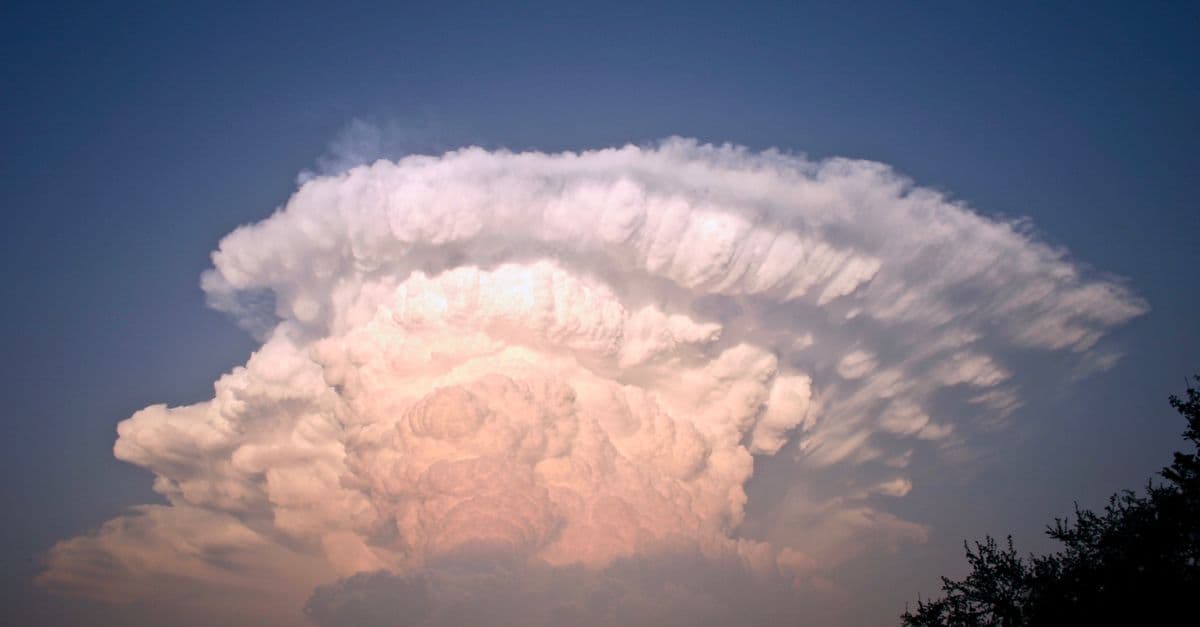
Photo by James Lee on Pexels
When my oldest was eight, she became obsessed with thunderstorms. Not in a "run inside" way, but in a "why does it happen that way" way. She'd press her face to the window during rain, asking questions faster than I could answer them. That's when I realized: meteorology and weather science might be exactly what our homeschool needed. It turned out to be one of the most engaging subjects we've studied, and honestly? It pulled the whole family in.
The thing about weather science is that it's happening right outside your door. You don't need to wonder if it's "real" or "relevant" — your kids are living it every single day. A good meteorology curriculum doesn't just teach atmospheric pressure and cloud formation; it invites your child to become an active observer of the world. You can build instruments together, track actual storm systems, watch climate patterns unfold over weeks and months, and suddenly science isn't something that happens in a textbook. It's something your kid is doing.
I want to share what actually worked for us — and what I've learned from other homeschooling families doing serious weather science. These aren't theoretical ideas. These are strategies you can start this week.
Start with What Your Kids Already Notice
Before you pull up a curriculum or buy a barometer, spend a week just noticing weather together. Ask your child to describe what they see, feel, and hear. Is it humid? How do they know? Did they notice the wind changed direction? What does that mean?
This sounds simple, but it's foundational. You're not teaching them meteorology from the top down; you're building from their genuine curiosity. That curiosity is the engine that'll keep them engaged through the harder concepts later.
With my daughter, we started a simple weather observation notebook. Every morning for two weeks, she'd write down the temperature, whether it was sunny or cloudy, if there was wind, and how she felt (tired, energized, restless). Then we looked back at the entries together. Did she notice any patterns? When it was humid, did she feel different? What happened the day after really windy weather?
This low-pressure beginning (pun intended) gave us a shared language. When I later introduced the concept of air pressure systems, she already had intuitive observations to connect it to. The abstract became concrete because she'd already been paying attention.
Build Real Instruments — and Use Them
This is where weather science gets fun. You can buy meteorology kits, but honestly? Building instruments from household materials teaches more because your child understands how the tool actually works.
We built three instruments that year, and I'd recommend starting with these:
- A rain gauge using a clear plastic container marked with a permanent marker in half-centimeter increments. Tape it outside in an open spot, check it after every rain, and record the measurements in a log.
- A wind vane using a straw, paper, and a pencil through a cork — it shows wind direction at a glance.
- A simple barometer using a balloon stretched over a jar with a straw pointer taped to it — changes in air pressure move the balloon, and you can watch (and predict) weather changes.
The key isn't perfection. The key is use. After we built our rain gauge, my son checked it almost religiously. He started correlating rainfall with the forecast, arguing with the weather app (in a good way), and noticing that the gauge often caught rain the weather service missed. He was thinking like a meteorologist without any pretense.
Your child will find something they want to track obsessively. Let them. One family I know built a wind speed measurer (an anemometer with four cups), and their twelve-year-old has now recorded wind data for an entire year. That's not just weather science; that's teaching your kid what it means to commit to observation and keep a scientific record.
If you want to go deeper, apps like Weather Underground let you enter data from your own instruments and see it displayed alongside official data. That moment when your child realizes their homemade rain gauge matches the professional one? That's science literacy happening in real time.
Adopt a Storm System and Track It for Days
This is the strategy that completely changed how we understood weather patterns. Instead of learning about fronts and pressure systems from a textbook, we picked an actual storm system moving across the country and tracked it like meteorologists do.
When a hurricane or significant low-pressure system formed during our study year, we'd pull up satellite maps, check the National Weather Service predictions, and then follow that system. We'd check it daily — sometimes multiple times a day — noting how the pressure was changing, where it was moving, what the predicted path showed.
We tracked Hurricane Ian from formation through landfall. My daughter would check the morning update before breakfast. "It weakened overnight — the wind shear must have increased," she'd announce, and we'd look up what wind shear actually was. There was a Monday when the storm jogged west instead of following the predicted northeast track, and we spent an entire lesson trying to understand why the forecast shifted.
This is meteorology and weather science in its purest form — real observation, real prediction, real consequences. Your child isn't solving hypothetical problems; they're watching a complex atmospheric system behave exactly as scientists predicted it would (or wouldn't).
Different regions will have different dramatic weather events. Hurricane season works beautifully for this, but so does tornado season in the Midwest, nor'easters on the coast, or monsoon patterns in the Southwest. You're teaching your child to read satellite imagery, understand pressure systems, and see how predictions actually work.
Create a Weather Journal with Layers
A simple daily log is useful. A layered journal becomes a rich scientific record that your child will actually enjoy maintaining.
Our weather journal had sections:
- Daily observations: temperature, conditions, wind direction (using our weather vane)
- Drawings: my daughter would sketch cloud types she observed, color-coded by altitude
- Questions and research: if she noticed something weird, she'd write the question and then research the answer
- Weekly patterns: every Friday, she'd reflect on the week — was it wetter than last week? Warmer? Why?
- Predictions: she'd make a short-term forecast and then check it against the actual weather three days later
The magic happens in the reflection. A kid who's just recording data is doing a chore. A kid who's analyzing whether their forecast was right and trying to figure out why they were wrong — that's a young scientist.
We used a beautiful hardcover notebook, which sounds small, but it mattered. There's something about a nice journal that makes a kid feel like they're really documenting something important. By the end of a year, she had a full record of weather patterns, her growing understanding of meteorology, and honestly? A lovely artifact of that period of study.
If digital appeals to your family more, a simple spreadsheet works too. The format matters less than the consistency and the reflection.
Connect Weather Science to Climate Patterns and Bigger Systems
Once your child understands how weather systems work, you can zoom out to climate. This is where you help them see that weather (what happens today or this week) is different from climate (patterns over decades), and that studying one helps you understand the other.
We spent time looking at historical weather data for our region. I pulled average temperatures and precipitation patterns for the past fifty years, and my daughter made graphs. Did rainfall patterns change? Was it getting warmer? We looked at some satellite images from the 1980s compared to current ones.
Then we connected it: the climate patterns she was learning about in the news weren't abstract. They were built from millions of days of weather like the ones she was observing and recording.
You can do this without making it political or overwhelming. You're simply teaching your child to read data, recognize patterns, and understand that global climate is made up of local weather. That's genuine scientific literacy.
The Deeper Learning Happens Through Asking Better Questions
Honestly, the best thing that happened in our meteorology unit wasn't something I planned. It was watching my daughter move from answering my questions to asking her own.
Instead of me saying, "Why do you think storms form?" she started wondering: "Why do some thunderstorms produce hail and others don't?" or "How do meteorologists know a tornado is coming before they see it?"
When kids own the inquiry, everything changes. She ended up doing a whole side exploration of severe weather prediction that wasn't in any curriculum. She watched YouTube videos from meteorologists, read blog posts from storm chasers, and filled pages of her journal with questions and theories.
Your job isn't to be the expert in meteorology and weather science. It's to help your child become curious enough to do the exploring. Create the conditions — the instruments, the journals, the permission to notice things, the encouragement to ask better questions — and they'll often surprise you with where they take it.
Making It Stick
Weather science is one of those subjects that doesn't really end when you close the curriculum. Your child will keep watching storms. They'll keep noticing clouds. They might start checking the forecast obsessively (or obsessively checking your local meteorologist on social media — yes, that happened in our house).
That's exactly how it should be. The goal isn't to finish a unit and move on. The goal is to build a kid who sees the weather differently, who understands the atmospheric systems that are literally surrounding them every moment, and who can think like a scientist about the world.
Start this week. Put out a rain gauge. Spend a day just noticing weather together. Ask your child what they wonder about. That's really all you need to launch a weather science unit that'll stick with them far longer than any test could measure.
Want a week of lessons built around your own child?