Pandemic Learning Lessons: What Worked & What We Won't Forget
Nov 2026 · 8 min read
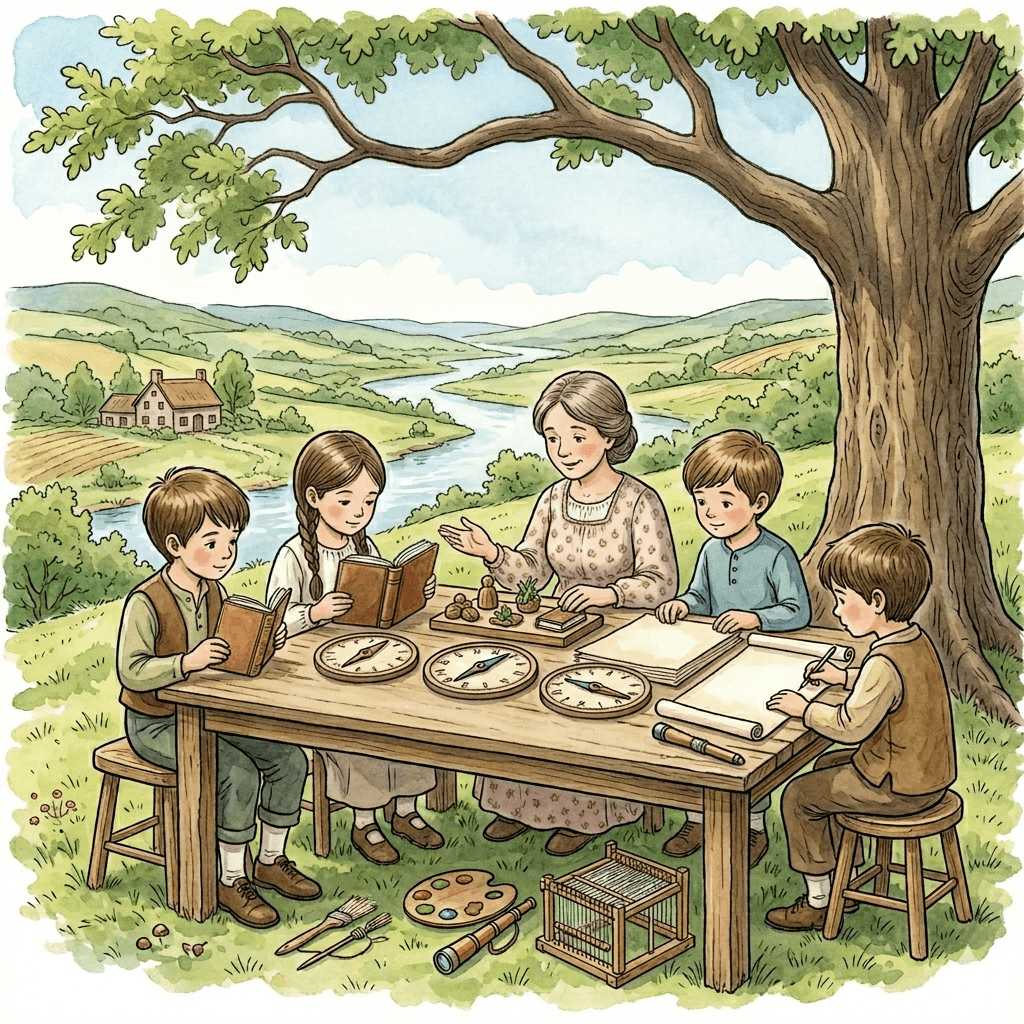
When March 2020 hit, I wasn't ready. None of us were. I remember sitting at my kitchen table with my two kids, staring at a stack of printed worksheets the school had sent home, thinking: This isn't going to work. That moment—when everything changed overnight—turned out to be one of the most important learning experiences our family has had. Not just for the kids, but for me as a parent trying to figure out how to actually educate at home.
It's been a few years now, and I've had time to reflect on what those pandemic homeschool learning lessons really taught us. Some of it was hard. Some of it was messy. But a lot of it was transformative in ways I never expected. I want to share what actually worked for us, not because I think we did everything right, but because I think these lessons might help you navigate your own homeschooling journey—whether you're doing it by choice, circumstance, or a mix of both.
The Pandemic Forced Us to Rethink What "Learning" Even Means
Before the pandemic, I had a pretty traditional idea of homeschooling. I thought it meant recreating school at home—structured hours, subjects blocked out on a schedule, worksheets and quizzes and grades. I was wrong about a lot of that.
When my oldest struggled with a math worksheet in April 2020, I could've forced it. Instead, we were out in the backyard measuring the fence, calculating wood stain coverage, and pricing materials for a planter box he wanted to build. Suddenly, he got fractions. Not because of a worksheet, but because the math was real and it mattered to him.
That's when it clicked for me: pandemic homeschool learning lessons aren't just about the academic content. They're about understanding how your kid actually learns.
Here's what shifted in our house:
- We stopped treating "school time" like it had to look like traditional school
- We noticed which subjects made them curious versus which ones made them shut down
- We realized that learning happens everywhere—not just at a desk
- We started asking "Why does this matter?" before diving into a lesson
This might sound obvious, but I don't think a lot of us really lived this truth until we had to. When you're home with your kids all day, you can't hide behind "that's just how school works." You have to actually make sense of why they're learning something.
Strategy #1: Build Around Interests Instead of Against Them
One of my biggest pandemic homeschool learning lessons came from my youngest, who was completely checked out from traditional lessons. She'd been labeled "unmotivated" at her old school. But at home, during lockdown, she became obsessed with baking.
I mean obsessed. Every single day: Can we bake? Can we bake? Can we please bake?
So instead of fighting it, we leaned all the way in.
We stopped doing isolated math worksheets and started using baking as the vehicle. She measured ingredients (fractions, unit conversions, proportions). She scaled recipes up and down (ratios and multiplication). She tracked time (estimation and elapsed time). She budgeted ingredients and compared prices at different stores (money skills). We watched videos about the history of bread-making (history), the chemistry of fermentation (science), and how different cultures have different baking traditions (cultural studies).
Within a month, this kid who was "unmotivated" was teaching her brother about gluten development and asking me questions about yeast metabolism.
Here's the practical part: I didn't abandon the curriculum. I wove the curriculum into something she actually cared about. That distinction matters.
If your child loves soccer, you're not just watching soccer—you're studying the physics of momentum, the history of the sport, the math behind statistics, the nutrition science that goes into athletic performance. If they love video games, you're looking at coding, narrative structure, game design, systems thinking.
This approach works because it answers the question every kid asks eventually: "Why do I need to know this?" When the answer is "Because you're curious about something you love," the motivation problem often dissolves.
Strategy #2: Create Rhythm, Not Rigidity
One of the hardest lessons I learned during pandemic homeschooling was the difference between structure and rigidity. I'd started out with a very rigid schedule: 9 AM math, 10 AM language arts, 11 AM history, and so on. By June, we were all burnt out and resentful.
What changed things was rhythm instead of rigidity.
Instead of "9 AM math," we had "math after breakfast." Instead of "this textbook chapter today," we had "we're studying the Revolutionary War this month, and here's how we'll explore it." Instead of "you must sit at the desk for two hours," we had "we'll work until this feels done or until we need a break."
This sounds like it'd be chaotic, but it was actually the most organized our learning became. Here's why: when you build rhythm instead of a rigid schedule, you naturally account for how humans actually learn.
Some days my oldest needed to sit and focus for 90 minutes straight on a project. Other days he needed to move every 15 minutes. Some days we needed to spend three hours on one thing because he was in flow state. Other days we needed to jump around because nobody could focus.
The rhythm approach meant we could be flexible without being un-structured. We had regular touchstones—morning review, independent work time, family read-aloud, project time—but not a lockstep schedule.
For us, this looked like: a loosely structured morning routine, a mid-day outdoor break (non-negotiable), quiet independent work time in the afternoon, and family learning time after dinner. But the content and duration of each could shift based on the day.
What I'd tell anyone starting pandemic-style homeschooling: rhythm beats rigidity every single time.
Strategy #3: Let Failure and Mess Be Part of the Curriculum
One thing school systems sanitize is failure. Kids rarely get to truly fail—they get corrections, redos, grade adjustments, accommodations. There's no space for the kind of messy failure that actually teaches you something.
At home during the pandemic, we couldn't avoid it. And honestly? That's one of the best pandemic homeschool learning lessons we got.
My oldest decided he wanted to film a short documentary about local history. Great! Ambitious! I was ready to help guide him toward a polished final product.
Instead, his first three attempts were... not good. The audio was unusable. He forgot to frame shots. He lost hours of footage because he didn't know how to properly save files. By attempt four, I could see him getting frustrated and ready to quit.
I wanted to jump in, take over, make it better. But I didn't. Instead, I asked: "What would you do differently next time?"
There was a next time. Attempt five was significantly better. Attempt seven was really solid. By the end, he didn't just have a finished project—he had learned how to learn from his mistakes.
That's something traditional schooling often doesn't give kids: the space to fail without it being a Grade. Just a learning opportunity.
Some concrete ways to build this into your homeschool:
- Let them attempt things before teaching them the "right way"
- Ask "What would you try differently?" instead of correcting immediately
- Celebrate the learning that comes from mistakes as much as you celebrate success
- Don't jump in to rescue them from struggling—sit with the struggle
- Keep a growth mindset visible: "You can't do this yet" instead of "You can't do this"
Strategy #4: Invest in Real Experiences Over Digital Resources
During the pandemic, I was tempted to download every free online curriculum, subscribe to every educational app, stream all the documentaries. The internet is packed with learning resources.
But you know what actually worked best? Real experiences in the real world.
We started a garden during lockdown—not for any educational reason, just because we wanted fresh vegetables and something to do. That garden became a living science curriculum. We watched ecosystems form, tracked plant growth, solved problems when things went wrong, learned about soil composition, studied insects, tracked weather patterns.
We visited local farms, talked to farmers, learned about local agriculture. We read about where our food comes from. We went to museums (once we could). We interviewed neighbors about local history. We walked trails and identified plants and animals. We cooked, built things, repaired things, created things.
None of these required subscriptions or apps. They just required us showing up and being curious together.
I'm not anti-technology or anti-online resources—we absolutely used both. But during the pandemic homeschool phase, I learned that real experiences create deeper learning than even the best online program. A child who watches a video about how to build a birdhouse doesn't learn the same way as a child who actually builds one, makes mistakes, adjusts their approach, and then hangs it up and watches birds use it.
Start with what's already in your life. A trip to the grocery store can become a math and economics lesson. A broken appliance can become a hands-on engineering problem. A conversation with a grandparent can become a history and storytelling session. A rainy day can become a science experiment. You don't need to buy more resources—you need to see what's already around you as a resource.
Strategy #5: Protect the Relationship Above All Else
This is the pandemic homeschool learning lesson that matters most, and I almost didn't include it because it feels obvious. But I think it needs to be said clearly: protecting your relationship with your child matters more than completing any curriculum.
I had days during lockdown where I was so focused on hitting all the learning objectives that I missed what was actually happening: my kids were anxious, I was anxious, and we were losing connection. The tension around "schoolwork" was bleeding into our family relationship.
There was a day—I'll never forget it—where my oldest literally shut down during a lesson. Not because the material was hard, but because he could feel my stress about whether we were "covering enough." We were both wound so tight that learning became impossible.
That night, I let it go. We sat on the couch with no agenda. We watched something he wanted to watch. We talked about his day. We were just... together. No assessment, no curriculum, no performance.
The next day? He was back. Engaged, curious, ready. Because the relationship was intact.
I had to learn (and re-learn, and re-learn again) that if I had to choose between checking off a curriculum box and maintaining a warm, connected relationship with my kid, I had to choose the relationship. Every time.
Some days this meant we did less academics and more connection. Some days this meant we modified what we were doing because he was having a hard time. Some days this meant I had to get my own stress managed so I wasn't projecting it onto him.
That work—the emotional and relational work—became some of my most important pandemic homeschool learning lessons.
What We're Taking Forward
The pandemic didn't break education. It actually gave us a glimpse of what could happen when we step back from the industrial model of schooling and remember that learning is personal, relational, and messy.
I won't pretend I want to go back to March 2020 or those early lockdown months—they were hard and scary. But I also won't pretend the pandemic homeschool learning lessons haven't changed how I see education, how I see my kids, and how I see my role as a parent.
We learned that rhythm works better than rigidity. We learned that interests are a feature, not a bug. We learned that real experiences stick. We learned that failure is a teacher. We learned that the relationship matters more than the checklist.
And we learned that homeschooling—whether by choice or circumstance—can be so much more than sitting at a desk with worksheets.
If you're homeschooling now, whether you're pandemic-displaced or choosing this path intentionally, I hope you'll remember that you don't have to do this perfectly. You just have to do it in a way that works for your family. Pay attention to what's actually working. Be willing to let go of what isn't. And remember that some of the best learning happens when you're willing to get off the traditional track.
That's what the pandemic taught us. That's what I won't forget.
Want a week of lessons built around your own child?