Screen-Free Learning: How to Thrive Without Technology
Sep 2026 · 8 min read
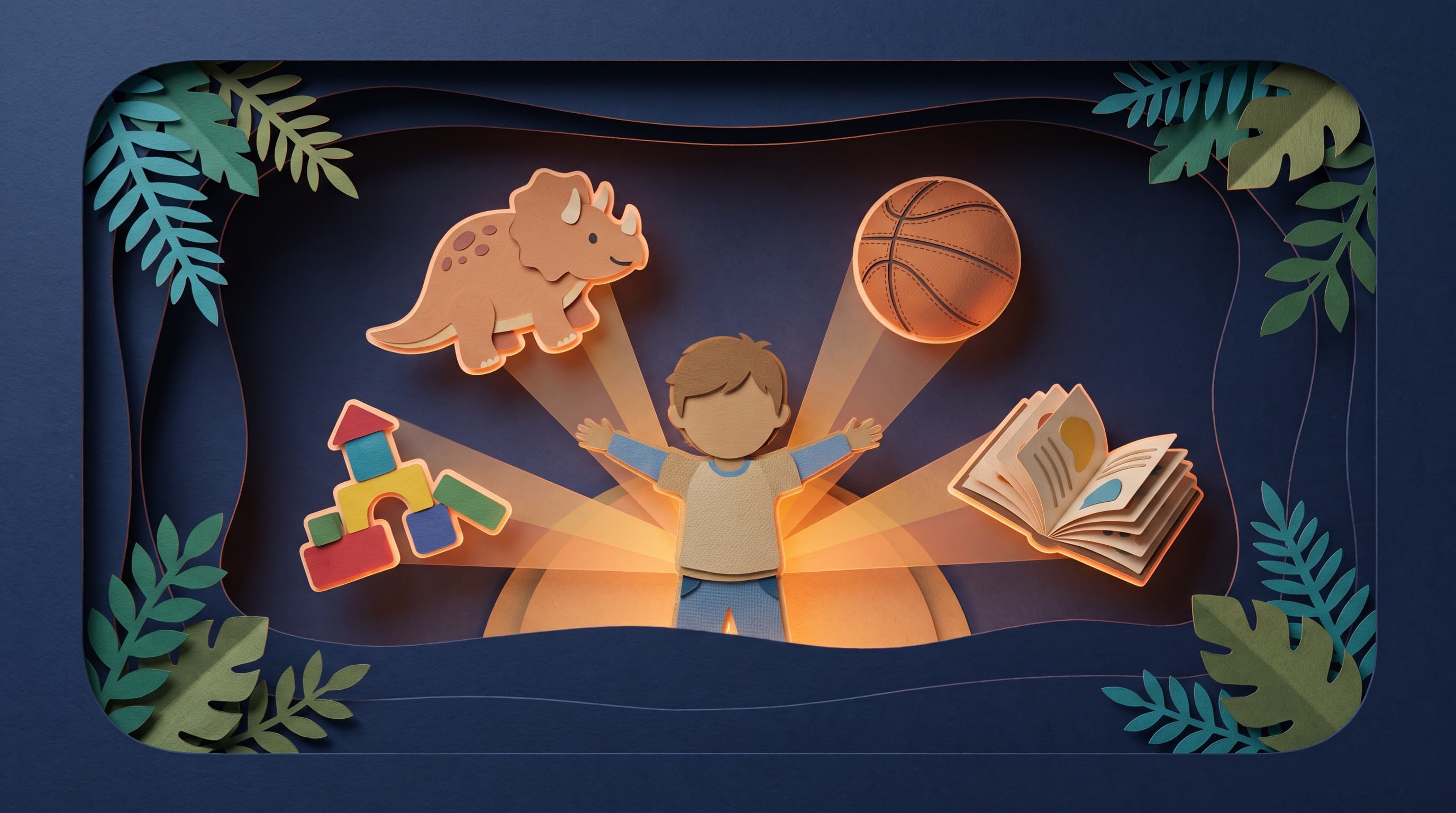
I remember the moment I realized my oldest was more engaged with a stack of library books and a sketchpad than she'd ever been scrolling through educational apps. We'd bought into the tech-heavy curriculum promise, thinking more screens meant more learning. Instead, I watched her glaze over during our "interactive" lessons, only to come alive when we ditched the devices entirely.
That shift didn't happen because I'm anti-technology. I'm not. It happened because I noticed something real: not all learning requires screens, and some of the deepest learning happens when we step away from them completely.
If you're feeling the weight of screen time expectations—or if you're just curious whether screen-free learning might work for your family—I want to walk you through what actually changed things for us and offer some concrete strategies you can try starting this week.
Why Screen-Free Learning Matters More Than You Think
Let's be honest: there's a lot of guilt around screen time in homeschooling. You're supposed to use all these amazing online tools, but also limit screens, but also make sure your kids aren't falling behind. It's exhausting.
Here's what I've learned: screen-free learning isn't about being a purist. It's about recognizing that certain types of learning—the kind that sticks, that builds real understanding, that creates genuine curiosity—often happen best without a screen mediating the experience.
When your child is reading a physical book, they're controlling the pace. When they're working with manipulatives, they're experiencing math kinesthetically. When they're having a real conversation about ideas instead of answering quiz questions, something different happens in their brain. There's space for thinking. There's room for questions that don't have multiple choice answers.
I'm not saying screens are bad. I'm saying that screen-free learning isn't something to feel guilty about avoiding—it's something to actively seek out because of what it uniquely offers.
Strategy 1: Build a Distraction-Free Reading Practice
This one transformed our homeschool more than anything else.
We started with something simple: a dedicated reading time, no screens, no distractions, just books. But here's what made it actually work: we made it non-negotiable and we made it appealing.
I created a reading nook in our living room. Not fancy—just a comfortable chair, good lighting, and a well-stocked shelf. I also made sure I was reading during this time. Kids notice what we value. When your child sees you actually lost in a book instead of checking your phone, something shifts.
The first week, my second grader read for maybe ten minutes before getting restless. By week three, he was regularly reading for thirty. By month two, he was asking for more time. The reading level improvement was noticeable—not because anything magical happened, but because he was actually reading instead of being tested on reading.
One parent in our community started a "book basket adventure" where her kids picked a book, made a cozy spot, and spent an hour just reading without checking the time. She said her daughter, who "hated reading," finished three chapter books in two weeks.
Here's how to start:
- Pick a consistent time daily—even 20 minutes counts
- Choose a comfortable, quiet spot with good light
- Stock it with physical books at various levels
- You read too during this time (this is non-negotiable)
- No time limit, no questions about comprehension—just reading
- Rotate books in and out to keep it fresh
The key is removing every barrier between your child and the book. No quizzes, no reading logs, no performance pressure. Just books and time. That's when screen-free learning becomes irresistible.
Strategy 2: Hands-On Math and Science Without Apps
When my third grader was struggling with fractions, I considered buying one of those interactive fraction apps. Instead, I grabbed a pizza cutter and some clay.
We literally made fractions. Cut them. Rearranged them. Built them from pieces. It took maybe 30 minutes total, and suddenly fractions made intuitive sense in a way no screen-based lesson had accomplished.
Screen-free learning in math and science means leaning into the manipulatives, the experiments, the real-world problem solving. It means getting messy. It means your child's hands are engaged, not just their eyes.
Some of our favorite screen-free math and science activities:
- Cooking and baking — fractions, measurement, chemical reactions, following sequential instructions. We bake at least weekly and it counts as math
- Gardening — geometry (plot layout), biology, data tracking, problem-solving when pests show up
- Building projects — we use cardboard, wood, recycled materials. Kids design, measure, adjust, problem-solve
- Nature walks with a mission — collect leaves for leaf identification, sketch birds for ornithology, measure tree heights
- Real kitchen chemistry — making butter from cream, observing fermentation, making homemade playdough
I know one family that struggled with their daughter's motivation in science until they started having her design and conduct her own experiments based on questions she actually wanted to answer. No curriculum, no videos. Just questions, materials, and observation. Within months, she was the one dragging her parents to the science museum.
What makes this screen-free approach so effective is that your child experiences the genuine process: curiosity, experimentation, failure, adjustment, success. That's not streamlined. It's messy. It's also how real learning happens.
To get started:
- Think about what naturally interests your child
- Find activities that create questions, not just answer them
- Buy some basic manipulatives (blocks, pattern tiles, measuring tools) and keep them accessible
- Plan one hands-on project per week that aligns with what you're learning
- Let your child lead the investigation sometimes—let them ask "what if?"
Strategy 3: Conversation-Based Learning
One of the biggest surprises for us was discovering that real conversation—actual thinking-out-loud dialogue with my kids—became one of our most powerful curriculum tools.
We started having what I call "discussion time." We read something or experience something together, then we actually talk about it. Not a quiz. Not a worksheet. Just thinking together.
My oldest was reading The Giver, and instead of doing the comprehension questions from the study guide, we talked about the questions she had. Why would people choose to give up color for sameness? What would you choose? That conversation lasted 45 minutes and revealed so much more about her thinking than any worksheet ever could.
Screen-free learning becomes deeper when you're not racing through content to "cover" it. Conversation allows for real thinking.
We've built this into our routine in concrete ways:
- "Dinner table debates" — we pick a story or idea from what we're learning and debate it over dinner
- Walk-and-talk time — some of my best conversations with my kids happen when we're walking, not sitting at a desk
- Read-aloud discussions — we read picture books together (yes, even with older kids) and pause to think about ideas
- Question journals — kids write or draw questions about what they're learning, then we discuss them
A homeschooling parent I know started having "philosophy Fridays" where her family just talks about big questions for 30 minutes. No agenda, no right answers. Her kids went from one-word answers to genuinely wrestling with ideas.
The thing about conversation-based learning is that it doesn't scale the way curriculum does. You can't give a standardized test on what your child learned through talking with you. But you can hear them think. You can understand how they actually process ideas. And your child gets the irreplaceable gift of an adult genuinely interested in their thinking.
To try this approach:
- Choose something you've both experienced—a read-aloud, a field trip, something you observed
- Ask open-ended questions ("What made you think that?" instead of "What was the main idea?")
- Sit with silence. Let them think
- Share your own thinking too—model the kind of thinking you want to see
- Don't rush to the "right answer"
Strategy 4: Create a Real-World Project System
Projects are where screen-free learning gets to prove itself. Not fake projects designed to teach a predetermined skill, but real projects where your child is actually making something or solving something.
Our family started a "project quarter" system where each kid identifies something they want to learn and create over a 12-week period. It has to result in something tangible.
One daughter wanted to learn woodworking and built a bookshelf. Another wanted to understand sustainable fashion and designed and sewed several outfits. My youngest wanted to learn about local history and created a museum exhibit in our basement.
No screens required. Lots of actual learning happened. They learned research skills (using books, talking to experts, visiting libraries), design thinking, problem-solving, and persistence.
What makes project-based screen-free learning work:
- It's self-directed — your child chooses the topic because they're genuinely curious
- It's goal-oriented — there's a real end product, not just completion of tasks
- It's interdisciplinary — math, writing, design, and thinking are all built in naturally
- It requires real-world navigation — how do you actually find out about this thing? Your child has to figure that out
One family's daughter wanted to start a community little library. Over three months, she learned about design, construction, community building, and maintenance. She surveyed neighbors, designed the structure, fundraised, built it, and now maintains it. That's a year's worth of curriculum embedded in one project she cares about.
To get started:
- Invite each child to think about something they're genuinely curious about
- Set a timeline (a quarter works well)
- Agree on what the final product or demonstration will be
- Step back and let them drive the research and creation
- Check in weekly, but don't direct—ask questions and point them toward resources
Strategy 5: Screen-Free Learning Through Apprenticeship and Real Work
This one feels almost too simple, but it's been quietly powerful in our homeschool.
Real learning happens when your child works with someone who actually knows something. Not watching a video about it. Doing it alongside someone.
My older son wanted to understand woodworking, so we found a neighbor who actually builds furniture. He spends two hours a week in that garage, learning by doing, by observation, by making mistakes and having someone show him how to fix them. No curriculum. No assessment. Just apprenticeship.
This is how humans learned for most of history. Not through screens or workbooks, but through working alongside skilled people.
You might explore:
- Local apprenticeships — find a baker, a gardener, an artist, a builder in your community
- Trade skills — plumbing, electrical work, carpentry—so much math and problem-solving happens here naturally
- Service projects — working at an animal shelter, helping with community cleanups, tutoring younger kids
- Family skills — cooking, preserving food, fixing things, budgeting
Screen-free learning through real work teaches something that no curriculum can: that learning is how you actually do things in the world. Not separate from life. Part of it.
Addressing the Real Concerns
I know what you might be thinking: "But what about college admissions? What about standardized tests?"
Here's what I've learned: kids who have deep engagement with learning do better on standardized tests than kids who've been trained on them. When you can think deeply, read well, and solve problems, tests become much less terrifying.
As for college: admissions officers are increasingly interested in what applicants are genuinely curious about and what they've created or built. A kid with three years of screen-free projects and real learning often looks more interesting than a kid with a perfect collection of online course certifications.
Does this mean you abandon all assessment? No. But it means you're not letting the tail of testing wag the dog of actual learning.
Making the Shift
You don't have to overhaul your entire curriculum this week. Start small.
Pick one of these strategies and try it for a month. Maybe it's a real reading nook, or one hands-on math project, or one weekly discussion time. Notice what happens to your child's engagement. Notice what you notice about their thinking.
Then add another layer when you're ready.
Screen-free learning isn't about rejecting technology entirely—it's about being intentional about where it belongs in your homeschool. And I'm telling you, some of the most important learning happens when the screens are off and your child is fully present with real materials, real conversations, and real problems that matter.
That's when the actual magic happens.
Want a week of lessons built around your own child?