Thanksgiving Homeschool: History, Gratitude & Family Time
Oct 2026 · 8 min read
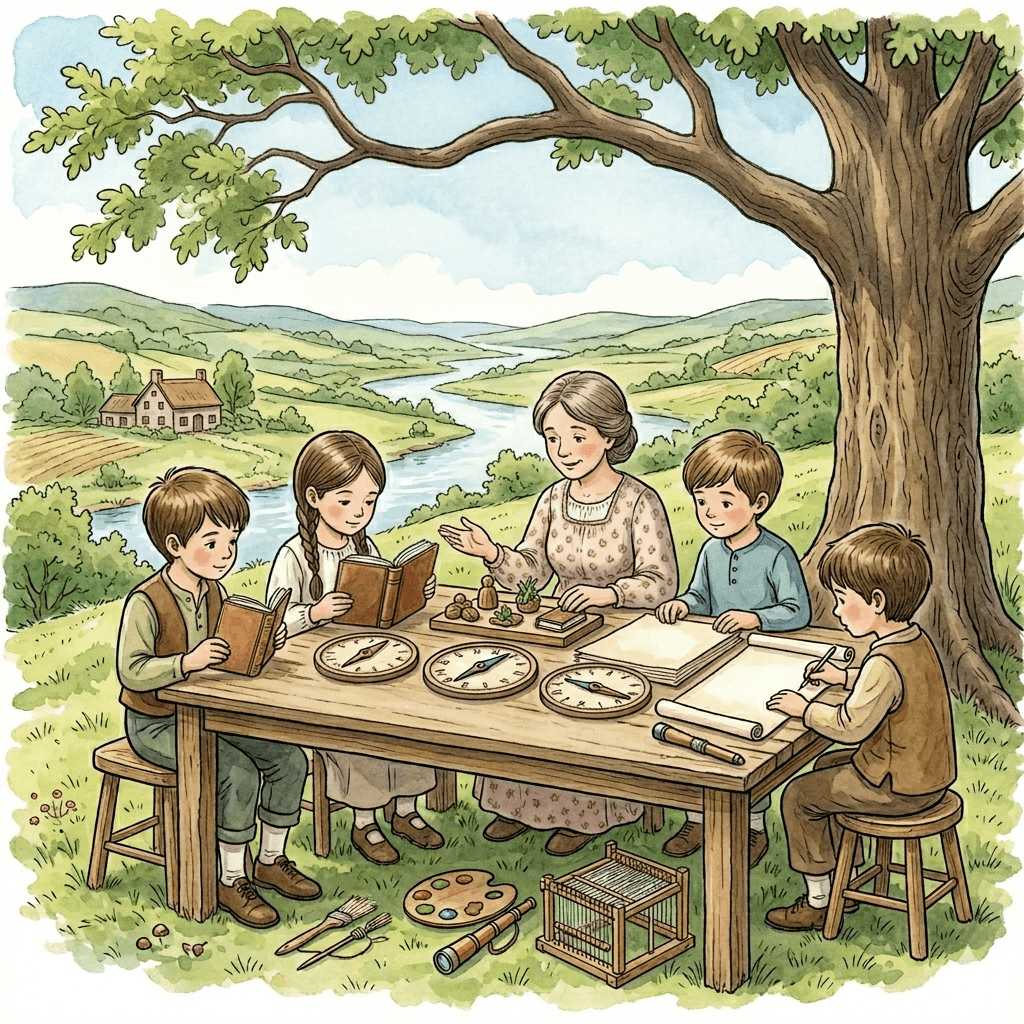
Thanksgiving sneaks up on me every year. One moment I'm packing away Halloween decorations, and the next thing I know, I'm staring at my calendar realizing we have three weeks to actually teach something about the holiday instead of just eating pie.
For years, I treated Thanksgiving like a break from school—a week to let the kids watch movies and play outside while I frantically prepped food. But I've learned that a Thanksgiving homeschool unit, done right, doesn't have to add stress. Instead, it becomes one of those rare teaching moments where the curriculum, family time, and genuine gratitude all weave together naturally.
If you're wondering how to make Thanksgiving meaningful in your homeschool without turning it into another rigid unit study, I want to share what's actually worked for our family—and what I've learned from talking to other homeschooling parents who've found their own rhythm with it.
Why Thanksgiving Matters in Your Homeschool (Beyond the Standard Facts)
Here's the thing about Thanksgiving: it's one of the few holidays where history, civics, and character education overlap in a way that feels genuine rather than forced. Your kids aren't just learning dates and names; they're wrestling with real questions about gratitude, perspective, and how we treat people who are different from us.
I used to think teaching Thanksgiving history meant drilling the kids on "the Pilgrims landed in 1620" and having them color in pictures of Native Americans in stereotypical clothing. But when I started actually digging into the harder, more honest history with my older kids, something shifted. They got curious. They asked better questions. And honestly, it made them more thoughtful people.
That's the magic of a well-designed Thanksgiving homeschool approach: it doesn't feel like forced learning. It feels like a natural extension of what your family is already doing.
Strategy 1: Start with Real Native American History (Not the Textbook Version)
I'll be honest—I was teaching a pretty sanitized version of Thanksgiving history for way too long. My kids learned about "friendly Native Americans helping the Pilgrims," but they didn't learn about the devastating impact of colonization or the incredible diversity of Native American nations that existed (and still exist) long before and after 1620.
The shift came when I realized I could teach the real, complex history without making it depressing. It's actually more interesting, and it treats Native Americans like the intelligent, varied people they are, rather than one-dimensional helpers in someone else's story.
Here's what changed our Thanksgiving homeschool learning:
Use resources created by Native Americans themselves. This matters more than I initially thought. When you read about Native American history from Native American authors and educators, the perspective is completely different. I started using resources from the Smithsonian's National Museum of the American Indian website, books like We Are Still Here by Traci Sorell (picture book for younger kids), and An Indigenous Peoples' History of the United States by Roxanne Dunbar-Ortiz (for older teens and parents). Your library can get these, and they're worth hunting down.
Focus on one nation deeply instead of generalizing. Instead of teaching "Native Americans" as if they were a monolith, we picked one nation—the Wampanoag—and really learned about their specific history, government, culture, and where their descendants live today. This one change made history feel like learning about people instead of a historical abstraction.
Ask the hard questions together. With my older kids, I wasn't afraid to ask: "Why do you think this story about Thanksgiving is told the way it is? Whose perspective is missing?" My 14-year-old came up with genuinely thoughtful observations, and it sparked conversations about bias in history that went way beyond Thanksgiving.
One year, my 9-year-old asked why we celebrate Thanksgiving if it wasn't actually a happy thing for Native Americans. Instead of deflecting, I said, "That's such a good question, and there are different ways families think about it." We talked about gratitude separate from the historical narrative, and she decided she wanted to learn more about Native American nations. That conversation—which happened organically because I wasn't trying to protect her from complexity—taught her more than any worksheet could have.
Strategy 2: Make Gratitude Intentional (Not Just Lip Service)
Gratitude is the heart of Thanksgiving, but I've noticed that if you don't make it intentional, it becomes this vague, mushy thing kids just nod along with. "Be grateful for your family." Sure, honey. Now can we eat?
What's worked better for us is creating specific practices that make gratitude concrete and worth thinking about.
The Gratitude Journal Experiment
Instead of one big gratitude exercise, we started a gratitude practice in the weeks leading up to Thanksgiving. Each person in our family keeps a simple notebook (or shared document for kids who prefer typing), and every few days, everyone adds one thing they're grateful for—but with a catch: you have to say why it matters to you.
It starts shallow. "I'm grateful for pizza because it's yummy." But by week three? "I'm grateful for Mom's bad jokes because they make me laugh even when I'm frustrated about math." That's when you know it's working. The gratitude gets real.
I don't grade this. I don't require it. I just model it consistently, and the kids join in because they see me doing it. On Thanksgiving morning, we read entries aloud, and it sets a completely different tone for the day than any prayer or speech could.
Gratitude Letters
Another practice that's surprisingly powerful: having each person write a short gratitude letter to someone in your life—a grandparent, teacher, friend, or even a sibling. Nothing fancy. Just: "I'm grateful for you because..." and some specific reasons why.
We mail them or deliver them in the days before Thanksgiving. The kids get to experience the joy of making someone else feel appreciated, and it shifts the focus from what they have to giving recognition to people they care about. Plus, the letters people get back are treasured.
My 11-year-old wrote a letter to her soccer coach thanking him for staying patient when she felt discouraged. His response—a handwritten note back—completely moved her. She's kept it on her bulletin board. That's the kind of learning that sticks.
Strategy 3: Cook Together as a Curriculum
If you're looking for a Thanksgiving homeschool approach that combines math, science, history, and practical life skills, stop overthinking it: cook together.
I used to see cooking as something I did while the kids were doing schoolwork. Now I see it as the schoolwork. Here's why it works so well:
Math is embedded naturally. Fractions, multiplication, unit conversion—all of it appears when you're actually cooking. "The recipe serves 6 but we have 12 people—how do we scale the ingredients?" It's real math with real stakes.
You can teach food history and culture. That cranberry sauce isn't just a side dish; it's an opportunity to learn where cranberries come from, how they're harvested, and why they became associated with Thanksgiving. Or you can research what people actually ate at different points in history. (Spoiler: there probably wasn't a casserole with marshmallows on top at any early Thanksgiving feast.)
Science happens. Why does yeast make bread rise? What's the chemistry of why you can't just substitute one flour for another? How does baking soda work differently than baking powder? These are legitimate science questions, and they answer themselves when you're making a pie crust.
It's a life skill. This is the one that matters most to me. My kids are learning to feed themselves and others, and that's education in the truest sense.
Here's how to make it work in your Thanksgiving homeschool:
Let each kid pick a dish to make (or co-make with you). Don't insist it has to be traditional. My son makes garlic bread because he loves it, and my daughter makes a vegetable stir-fry. It's their contribution.
Have them read the recipe and gather ingredients without too much input from you. Let them make mistakes (the cookies are a bit too brown, the sauce is thinner than expected). Those are teaching moments.
If math skills need work, have them do the recipe scaling or calculation explicitly. If science needs attention, ask them why they think certain steps matter.
Eat what they made and actually enjoy it, mistakes and all. This teaches them that effort and learning are more valuable than perfection.
Last Thanksgiving, my 8-year-old insisted on making sweet potato fries from scratch. They were weirdly shaped and somewhat unevenly cooked, but she was so proud. And you know what? They were delicious. She learned that homemade food doesn't have to look like a magazine to be worthwhile. That's the curriculum I actually want her to internalize.
Strategy 4: Create a Thanksgiving "Giving Back" Project
One of my favorite additions to our Thanksgiving homeschool unit is tying gratitude to generosity—actually doing something for others rather than just talking about being thankful.
The magic is in choosing a project that your kids care about, not something you decide they should care about.
Some ideas that have worked:
- Help prepare or deliver food at a local food bank or soup kitchen
- Create care packages for people experiencing homelessness
- Organize a donation drive at your homeschool co-op for an animal shelter
- Write thank-you notes to people in your community—mail carriers, librarians, teachers, emergency responders
- Rake leaves or do yard work for elderly neighbors
The key is letting kids help choose the project. When my oldest was 10, she decided she wanted to make blankets for the shelter animals at our local rescue. We researched what they needed, bought fleece, and she spent several afternoons cutting and tying blankets. It took longer than expected, and honestly, the craftsmanship was mediocre. But she learned that gratitude means doing something that's inconvenient.
These projects don't have to be complicated or take up tons of time. An hour of your Thanksgiving homeschool week spent doing something genuinely helpful is worth more than days of worksheets about gratitude.
Strategy 5: Build in Margin and Flexibility
Here's the thing I wish I'd known earlier: the best Thanksgiving homeschool weeks are the ones where you plan 70% and leave 30% flexible.
Some of my favorite Thanksgiving moments with my kids have been unplanned: the afternoon we ended up in a Wikipedia rabbit hole about different cranberry varieties, the hour my kids spent interviewing their grandparents about what Thanksgiving meant to them growing up, the morning we spontaneously decided to bake extra cookies for neighbors.
These moments happen when you're not rigidly following a unit study checklist. They happen when someone asks a question and you actually have time to explore it together.
So yes, plan some structure. Know what history you want to cover, what books you want to read, what cooking project you're doing. But don't schedule every hour. Leave space for conversation, tangents, and the kind of learning that happens when you're not officially "doing school."
One year, my middle child got fascinated by the history of cornbread during our Thanksgiving prep. We ended up learning about the history of corn in North America, how it shaped Native American civilizations, and how it traveled to other parts of the world. It took us two weeks and veered far from our original Thanksgiving unit—but it was real learning, the kind that comes from genuine curiosity.
Putting It Together
A meaningful Thanksgiving homeschool doesn't have to mean an elaborate unit study with worksheets and assessments. It means weaving together the history, the generosity, the cooking, and the family connection in whatever way makes sense for your family.
For us, that looks like spending the week before Thanksgiving reading about Native American history together, working in the kitchen as a team, writing letters of gratitude, and doing a small giving-back project. It's not fancy. It's not Pinterest-worthy. But it's become one of my favorite weeks of the homeschool year.
Your Thanksgiving homeschool might look completely different, and that's perfect. The point isn't to follow a formula—it's to make room for the holiday to mean something real in your family's learning and life.
So as you're thinking about how to approach Thanksgiving this year, I'd encourage you to ask: What does gratitude actually mean in our family? What do we want our kids to understand about this holiday and this moment in history? And how can we make that understanding something they live, not just something they learn?
That's where the real education happens.
Want a week of lessons built around your own child?